
You have selected the electrolyzer technology—PEM or alkaline. You have secured the grid connection or renewable energy source. Now comes a question that can shape your project timeline, site costs, and long-term operational flexibility: how will the DC power supply be deployed?
For electrolysis projects ranging from 500 kW pilot plants to multi‑MW commercial hydrogen facilities, the containerized DC power supply has emerged as a compelling alternative to traditional site‑built power rooms.
This guide explains what a containerized DC power supply is, why it matters for electrolysis, and how to decide whether it fits your project.
What Is a Containerized DC Power Supply for Electrolysis?
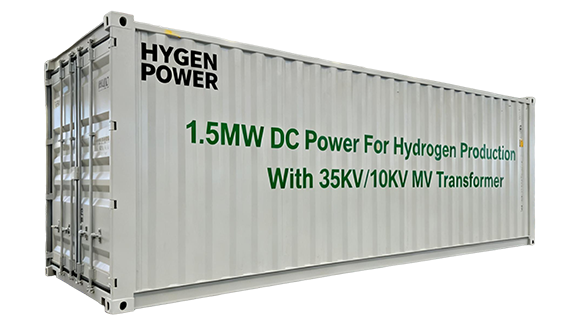
A containerized DC power supply houses all critical power conversion components—rectifiers, transformers, control systems, cooling, switchgear, harmonic filters, and auxiliary systems—within a standard ISO shipping container (typically 20‑foot or 40‑foot). The entire system is factory‑assembled, pre‑wired, and factory‑tested before delivery.
What is typically included inside the container:
-
Rectifier system (thyristor‑based or IGBT‑based, depending on application)
-
Rectifier transformer with appropriate voltage step‑down
-
Control cabinet with PLC and communication interfaces
-
Cooling system (forced‑air or liquid‑cooled)
-
Harmonic filtering and power factor correction (passive or active)
-
DC isolators and protection devices
-
Auxiliary systems (lighting, fire suppression, environmental control)
For a minimised footprint and simplified on‑site setup, containerized or skid‑mounted PSUs are delivered fully assembled and ready for use. This means the power supply arrives as a complete, tested unit—not as a collection of components that must be assembled and wired on site.
What this means for your project: A containerized DC power supply transforms a complex, multi‑supplier field integration into a single‑point delivery. Instead of managing separate deliveries of transformers, rectifiers, filters, and control cabinets—each with its own wiring and commissioning requirements—you receive one unit that is ready to connect to the grid and the electrolyzer.
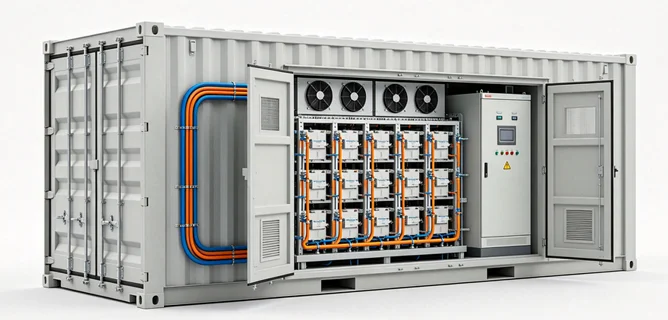
To understand how these integrated systems are configured for different electrolyzer technologies, IGBT DC power supplies for PEM and alkaline electrolysis.
Why Containerized DC Power Supply for Electrolysis Matters – Key Benefits
The containerized approach addresses several challenges that have historically delayed electrolysis projects.
Faster Deployment and Installation
Electrolysis projects are often part of larger, time‑sensitive investments. The longer the power supply takes to install and commission, the longer the delay in delivering clean hydrogen.
Containerized systems are delivered as pre‑assembled, tested units. The entire system can be installed in approximately 2‑3 weeks, up to 80% less than traditional hydrogen plants, reducing initial investment and labor costs. Traditional site‑built power rooms, by contrast, typically require months of construction, wiring, and commissioning.
Reduced Installation Risk
One of the biggest risks in electrolysis projects lies in the installation phase. Every day of delay costs money and postpones project benefits. Containerized systems significantly reduce the number of variables on site:
-
No need for complex wiring across multiple suppliers
-
Less dependence on unpredictable on‑site conditions
-
Faster commissioning with minimal disruption to other project steps
Fewer unknowns means fewer mistakes and far greater confidence in getting the system up and running on schedule.
Factory Testing and Quality Assurance
A containerized system is fully tested before it leaves the factory. This means potential issues are identified and resolved in a controlled environment—not discovered during field commissioning when timelines are already tight. Factory test reports provide documented evidence of performance, reducing approval uncertainty.
Modular Scalability
Containerized DC power supplies are designed for modular expansion. A standardized 5 MW containerized design ensures consistent performance and simplified deployment. Each unit can operate independently or be paralleled into larger outputs, allowing seamless scaling from a single module to entire gigawatt‑class installations. This modular building‑block architecture delivers maximum flexibility, making it possible to expand capacity step by step without redesign or system disruption.
Simplified Maintenance and Service
Once in operation, maintaining uptime is critical. Downtime in electrolysis plants not only disrupts production but can also damage sensitive electrolyzer stacks. Containerized systems make maintenance straightforward:
-
All critical components are grouped in one accessible unit
-
Service teams can perform diagnostics faster, reducing downtime
-
Standardized designs simplify spare parts management and training
Combined with digital monitoring and global service support, containerized systems give operators peace of mind that help is available quickly—no matter where the installation is located.
Environmental Protection
Containerized units are designed for outdoor deployment in a variety of environments—from desert heat to coastal salt spray. The ISO container provides structural protection while housing climate control systems that maintain safe operating conditions. This eliminates the need for a dedicated power house building, saving both capital and space.
Containerized vs Site‑Built – A Decision Framework
| Decision Factor | Containerized DC Power Supply | Site‑Built Power Room |
|---|---|---|
| Installation timeline | 2‑3 weeks | 2‑6 months |
| Site preparation | Concrete pad only | Full building with fire rating, ventilation, lighting |
| Factory testing | Complete before delivery | Field testing after installation |
| Scalability | Add parallel containers as needed | Requires building expansion or new room |
| Maintenance access | All components in one container | Potentially easier but requires dedicated space |
| Transportability | ISO‑compliant—can be relocated | Permanent installation |
| Environmental protection | Built‑in—outdoor‑ready | Relies on building quality |
| Risk profile | Lower—fewer site variables | Higher—more on‑site dependencies |
When containerized DC power supply is typically preferred:
-
Remote or harsh environments where building construction is expensive or impractical
-
Projects with aggressive timelines requiring rapid deployment
-
Plants with planned future expansion where modular addition is valuable
-
Sites with limited available space where a compact footprint matters
-
Multi‑site operators who value standardized, repeatable deployment
When site‑built may still be appropriate:
-
Facilities with existing power house infrastructure already in place
-
Projects requiring highly customized, non‑standard layouts
-
Sites with very low labor costs, where on‑site construction is economical
A growing number of green hydrogen projects are choosing containerized approaches. In December 2025, HyAxiom confirmed KraftPowercon as the awarded rectifier provider for its 5 MW electrolyzer system on Jeju Island—a containerized, plug‑and‑play power conversion solution designed to simplify installation and support efficient commissioning. As one project lead noted, “At this scale, we assess technical compliance, testing capability, schedule, cost, and delivery.”
For projects considering a containerized approach, explore containerized AC/DC IGBT Hydrogen Power Supply for electrolysis applications to understand how these systems are being deployed in real projects.
Technical Considerations for Containerized DC Power Supply in Electrolysis
Power Quality and Harmonic Performance
Electrolyzers require stable DC output with low ripple—typically below 5%—to ensure best performance, operating life, and efficiency. Containerized systems integrate harmonic filtering and power factor correction directly.
For the Jeju project, the rectifier system is based on an active front end architecture developed to reduce harmonic current contribution. A target of total harmonic distortion in current below 3% aligns with expectations that typically apply as plant power levels increase. This is particularly important in regions with high renewable penetration, where grid characteristics can vary.
Electrolyzer Technology Compatibility
Different electrolyzer technologies have different DC power requirements:
| Parameter | PEM Electrolyzer | Alkaline (AWE) Electrolyzer |
|---|---|---|
| Cell voltage | 1.8‑2.2V per cell | 1.8‑2.4V per cell |
| Ripple sensitivity | High (>3% degrades membrane) | Moderate (5‑8% acceptable) |
| Dynamic response | Fast (<100 ms) | Slow (seconds) |
| Preferred operation | Agile, variable load | Steady, constant power |
A containerized DC power supply can be configured for either technology. For PEM systems, IGBT‑based converters with low output ripple and fast current control are typically preferred. For alkaline systems, thyristor‑based rectifiers with a wide voltage range and overload capability are often suitable.
Cooling Requirements
Containerized systems integrate cooling directly. Forced‑air cooling is common for smaller units, while liquid cooling becomes important for larger systems or high‑ambient environments. The choice affects footprint, maintenance frequency, and derating margins.
Real‑World Project Example – Containerized DC Power Supply in Action
Project: Jeju Island Hydrogen Production Plant, South Korea
Scale: 5 MW electrolyzer system
Approach: Containerized, plug‑and‑play power conversion solution (H2Kraft concept)
Key considerations:
-
High renewable penetration on the grid made harmonic performance critical
-
System‑level reliability was a primary consideration
-
Local permitting and inspection requirements needed early attention
-
Target harmonic distortion below 3%
Outcome: The containerized approach simplified site execution while supporting stable DC power and grid‑friendly performance. On‑site support was provided to ensure smooth implementation and timely completion.
This project demonstrates how containerized DC power supply can address both electrical performance and project execution challenges in a single integrated solution.
From Evaluation to Selection – Making the Decision
The decision to use a containerized DC power supply for electrolysis ultimately depends on your project’s specific constraints:
-
If speed and simplicity are priorities → containerized offers a proven, factory‑tested path
-
If your site is remote or harsh → containerized eliminates the need for on‑site building construction
-
If you plan future expansion → modular containerized systems scale without redesign
-
If you have existing power house infrastructure → site‑built may still be economical
The “right” answer depends on your site, your timeline, and your long‑term operational strategy. Many project teams find that the total installed cost—not the equipment cost alone—is the deciding factor. When site preparation, building construction, and field labor are factored in, containerized solutions often prove more economical over the full project lifecycle.
Once you have clarified these key decision factors—site conditions, timeline, expansion plans, and maintenance philosophy—comparing the specific specifications of available power supply options becomes the next logical step. You can review containerized DC power supply configurations for electrolysis projects or explore system designs for multi‑MW hydrogen plants.
Related Reading
To deepen your understanding of power supply deployment for green hydrogen projects, explore these related topics:
-
Containerized vs Non‑Containerized AC/DC Power Supply
-
How to Integrate Containerized DC Power Supply with Renewable Input
-
PEM vs Alkaline Electrolyzer Power Requirements
-
Cooling System Design for High‑Power Rectifiers
-
Grid Integration and Harmonic Filtering for Electrolysis Power Supplies