
Selecting the right power conditioning unit for a stationary fuel cell system is rarely straightforward. Many engineering teams default to a kW-scale architecture simply because it feels familiar. However, when your roadmap includes megawatt-level output, that comfort zone can become a costly bottleneck.
This guide compares modular kW-class stacks against centralized MW-class solutions. We will focus on real-world metrics: partial-load efficiency, thermal management, grid interconnection, and total cost of ownership. By the end, you will have a clear decision framework for your next balance of plant (BoP) design.
The Scaling Trap: Why kW-Class Stacks Struggle at Megawatt Scale
Many engineers begin with a 100kW or 250kW unit, planning to parallel ten or more identical blocks to reach 1-2MW. In theory, this modular approach offers redundancy. In practice, three hidden issues emerge:
-
Circulating currents between paralleled units reduce net efficiency by 4-7%.
-
Control latency across multiple digital signal processors (DSPs) creates voltage ripple that grid-tied inverters reject.
-
Cooling imbalance – inner units in a cabinet run hotter, accelerating capacitor aging.
For backup power or microgrids running <500 hours annually, these trade-offs may be acceptable. But for continuous, revenue-generating stationary power (e.g., data center primary power or hydrogen refueling stations), the kW-class approach reaches its limits quickly.
Core Topology Differences: High-Frequency vs. Interleaved Boost
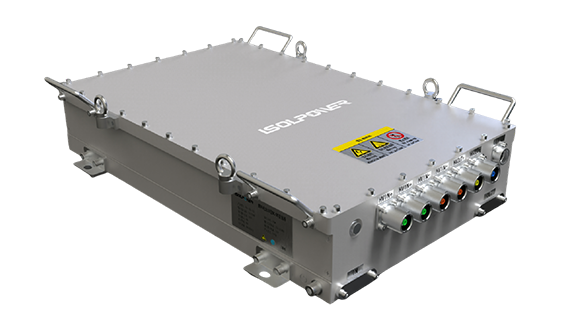
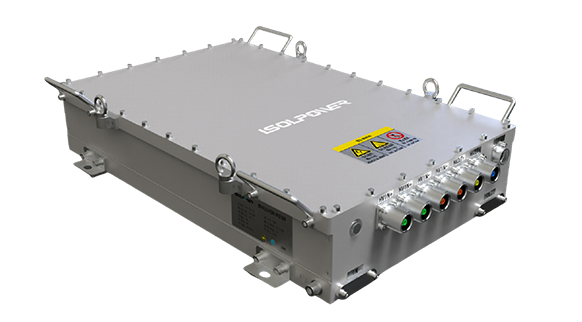
The internal architecture dictates real-world performance. kW-class converters (1kW–500kW range) typically use high-frequency, hard-switched boost topologies. They are compact and cost-effective at low power. However, switching losses rise with the square of current. At 800A input, those losses become heat that must be removed.
MW-class solutions (750kW–3MW) employ multilevel interleaved boost or isolated full-bridge designs. By phase-shifting multiple switching legs, they reduce input current ripple and lower the required inductance. The result: higher efficiency at partial load (often 98.5% vs 95.5% for kW stacks) and much lower electromagnetic interference (EMI) – critical for passing IEEE 1547 grid standards.
Thermal Management & Lifespan: Forced Air vs. Liquid Cooling
Heat is the enemy of electrolytic capacitors and IGBTs. kW-class units rely on forced air cooling (fans). This works in clean, climate-controlled indoor spaces. But in a standard 40-foot container deployed outdoors, dust clogs filters, and fan bearings fail. Each fan failure causes derating.
Liquid-cooled MW-class converters maintain stable junction temperatures even at 100% load in 50°C ambient conditions. Without thermal cycling, semiconductor lifespan extends from ~7 years to over 15 years. If your project guarantees availability above 99.5% (e.g., critical load or hydrogen production), liquid cooling is not optional – it is an economic necessity.
Cost Analysis: CAPEX, OPEX, and Installation
| Factor | kW-Class (500kW blocks, 2MW total) | MW-Class (single 2MW unit) |
|---|---|---|
| Capital cost (per MW) | 1.0x baseline | 1.15x – 1.3x |
| Installation labor | High (4 units, 4 sets of cabling & breakers) | Low (single set of DC/AC terminations) |
| Annual maintenance | 8-12 fan replacements + cleaning | Coolant check every 18 months |
| Transformer requirement | Often needs a step-up transformer | Direct MV connection possible |
| Total cost (10 years) | 1.4x – 1.6x baseline | 1.0x – 1.1x baseline |
The table shows a clear crossover: the higher upfront price of an MW-class converter pays back within 3-5 years through lower installation, reduced downtime, and avoided cooling maintenance. For projects with a 15-year PPA, MW-class wins on lifetime value.
Grid Compliance and Advanced Features
Utility-scale grid codes (e.g., Rule 21, VDE-AR-N 4120) demand low-voltage ride-through (LVRT) and reactive power capability. MW-class converters include these as standard. kW-class units, designed originally for batteries or smaller fuel cells, often require external add-on boxes for LVRT. Each add-on introduces another failure point and control delay.
Furthermore, large hydrogen plants or fuel cell power stations increasingly require black-start capability and grid-forming behavior. To provide a stable voltage reference during island mode, the converter must have sufficient output filter capacitance. MW-class designs have this headroom. Most kW-class paralleled stacks do not.
Decision Guide: Which Architecture Fits Your Project?
Choose kW-class modular blocks if:
-
Total power is ≤500kW.
-
Runtime is intermittent (<1000 hours/year).
-
You have an existing 480V AC infrastructure.
-
Load is non-critical (e.g., educational demonstration).
Choose a centralized MW-class converter if:
-
Planned capacity ≥1MW, with expansion to 3-5MW.
-
Operation is continuous (8,000+ hours/year).
-
Ambient conditions are harsh (dust, humidity, high heat).
-
You require LVRT, black-start, or grid-forming.
-
Your goal is lowest levelized cost of energy (LCOE) over 10+ years.
Industry Trends & Real-World Validation
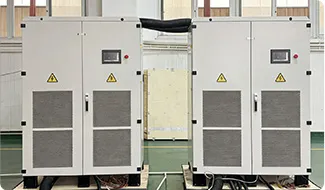
Recent projects in the European Hydrogen Backbone and California’s stationary fuel cell deployments have shifted toward centralized high-power DC-DC conversion. A 2024 analysis by DNV (Det Norske Veritas) found that multi-megawatt projects retrofitting from paralleled kW units to single MW-class power conditioning saw a 12% improvement in annual energy yield simply from reduced parasitic losses and less downtime for fan cleaning.
If your system demands utility-scale reliability and you prefer a single point of accountability for power conditioning, explore configurations designed specifically for megawatt-class fuel cell rooms. Click here to review technical specifications for high-power DC-DC solutions for stationary hydrogen power plants. For engineers working on 1MW+ projects, a liquid-cooled, grid-ready converter eliminates most field integration headaches.
Final Verdict
A kW-class paralleled stack works for low-duty, small-scale projects. For anything running 24/7 above 1MW, the efficiency, reliability, and long-term cost profile of a true MW-class converter are superior. Match your BoP to your project’s revenue model, not just its nameplate power.