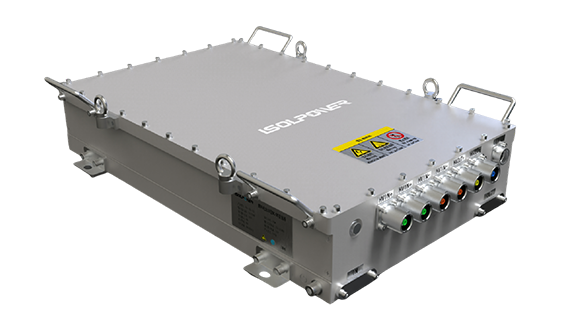

When you are planning a megawatt-level charging station for electric trucks, buses, or other commercial fleet vehicles, one component forms the technical backbone of the entire system: the power module. At 2MW scale, traditional air-cooled modules reach their thermal limits quickly—liquid cooling is no longer optional. But how do you evaluate one liquid-cooled 2MW power module against another?
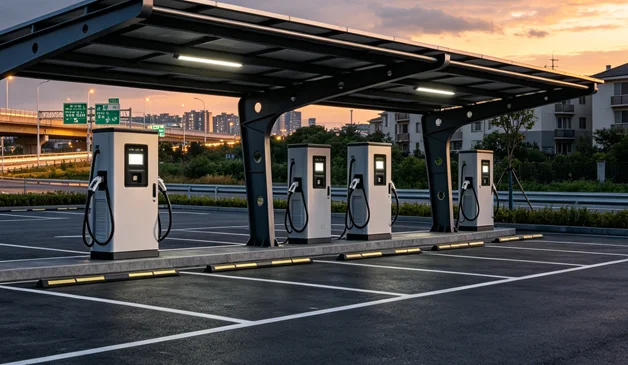
This guide walks through the key decision factors—power density, thermal performance, efficiency, protection level, and standards compliance—to help you build an evaluation framework before comparing specific products.
Why 2MW Charging Demands Liquid Cooling
The shift from 150kW passenger car chargers to 2MW+ commercial vehicle chargers is not simply a matter of scaling up. At higher currents, resistive heat increases as the square of the current (I²R losses). When a charger delivers 2MW—achievable at 1500V and 1,334A, or at lower voltages with proportionally higher current—the thermal load on semiconductor devices, busbars, and connectors becomes substantial.
A 2025 analysis from Keysight notes that “at current levels of up to 3000 amps, significant heat losses occur, which not only reduce efficiency but also pose safety risks. To reliably dissipate this heat, MCS relies on an actively cooled cable and connector system with liquid cooling, ensuring stable thermal performance even under continuous load.” Liquid cooling is not a premium option for 2MW systems; it is a core enabler.
Why liquid cooling is preferred for 2MW applications:
| Comparison Factor | Air-Cooled Module | Liquid-Cooled Module |
|---|---|---|
| Heat dissipation capacity | Limited to ~150–200W per module | 5–10x higher vs. air cooling |
| Temperature control precision | Less uniform; hot spots common | Uniform cooling across all components |
| Noise level | High fan noise | Near-silent operation |
| Protection capability (dust/water) | Limited to IP20–IP54 | Can achieve IP65+ |
| Typical lifespan (harsh environments) | 3–5 years | 8–10 years |
| Suitability for 2MW+ systems | Not practical | Required |
The practical implication for fleet operators: a liquid-cooled 2MW power module can maintain consistent output throughout a summer day without thermal derating, while an air-cooled system at similar power levels would need to reduce output or risk component failure.
Five Core Dimensions for Evaluating 2MW Liquid-Cooled Power Modules
Use this five-step evaluation framework when assessing candidate power modules. Each dimension translates technical specifications into operational outcomes for your charging station.
Step 1: Define your required power level and output configuration
The term “2MW” can be delivered in multiple ways: single-output 2MW for a single vehicle, or split-output configurations (e.g., 4×500kW or 2×1MW for simultaneous charging). Your choice affects:
-
Module topology: AC/DC modules are the “bridge” from grid to battery—converting grid AC to high-voltage DC for the DC bus. DC/DC modules act as “regulators” for DC systems, adjusting voltage levels for individual charging terminals with dynamic response as fast as 100A/ms.
-
Power sharing flexibility: Modular architectures with multiple lower-power modules allow dynamic power allocation across multiple vehicles—an important feature if your station serves a mix of vehicle types.
-
Scalability: A modular design (e.g., parallel or redundant configuration of multiple power modules) enables you to start with lower initial capacity and add modules as fleet size grows. MCS standards explicitly embrace modular designs because they allow easy expansion and simplified maintenance.
The key question for your operation: Will you need to charge one vehicle at 2MW or multiple vehicles simultaneously?
Step 2: Evaluate power density and footprint efficiency
Power density—measured in kW per liter (kW/L) or kW per square meter (kW/m² for complete systems)—directly affects your station’s land cost and cabinet footprint.
-
Current benchmarks: Industry-leading 40kW charging modules achieve power densities around 60W/in³ (approximately 3.7kW/L). With SiC adoption and advanced liquid cooling, power densities are pushing toward 8kW/L.
-
Why density matters: Higher density means more power in less space—reducing the number of cabinets required and lowering construction and real estate costs. For a 2MW station, even a 20% reduction in footprint can translate into significant savings in dense urban or port environments.
-
The trade-off: Higher density typically demands more sophisticated cooling (direct liquid cooling vs. cold-plate cooling) and higher-quality components. Verify that quoted density figures refer to sustained output, not peak ratings under ideal conditions.
Step 3: Compare thermal management and cooling architecture
Not all liquid cooling systems are equal. The cooling architecture determines how reliably the module sustains rated power under real-world conditions—especially during summer peaks in unshaded outdoor locations.
Three liquid cooling approaches to evaluate:
| Cooling Architecture | How It Works | Typical Applications | Key Consideration |
|---|---|---|---|
| Cold-plate cooling (indirect) | Coolant circulates through plates attached to heat-generating components | Most common in 50–150kW modules | Simpler design but less uniform cooling |
| Direct liquid cooling | Coolant directly contacts power devices (e.g., IGBTs with internal liquid channels) | High-power (>150kW) and SiC-based systems | Thermal resistance reduced by ~40% vs. indirect |
| Immersion cooling | Entire module or components submerged in dielectric coolant | High-end systems; extreme environments | Highest thermal performance but higher complexity |
Practical evaluation criteria:
-
Thermal derating behavior: Request thermal derating curves showing output power vs. ambient temperature. A well-designed liquid-cooled system should maintain full 2MW output up to at least 40–45°C ambient. Some advanced immersion-cooled systems reportedly sustain full power with less than 3% derating even at +50°C ambient.
-
Cooling loop integration: Determine whether the power module requires connection to an external chiller or radiator loop, or includes integrated thermal management. This affects both installation complexity and ongoing maintenance.
-
Leak detection and fail-safe: Look for integrated sensors monitoring coolant pressure, flow rate, and temperature, plus automatic shutdown logic for leak detection.
The operational bottom line: A power module with superior liquid cooling will deliver its rated 2MW hour after hour, regardless of weather, while an inadequate system may force output reduction on hot days—directly impacting your fleet’s turnaround time.
Step 4: Scrutinize efficiency, especially at partial load
Efficiency determines your station’s operating cost over its lifetime. For a 2MW station running 2,000–4,000 hours annually, every percentage point of efficiency translates into tens of thousands of kilowatt-hours—and real electricity expense.
What to look for:
-
Peak efficiency vs. weighted average efficiency: Many manufacturers advertise peak efficiency (>98% is achievable with full SiC designs), but real-world operation often occurs at 40–80% load. Ask for weighted average efficiency across typical load profiles. For reference, national Level 1 energy efficiency standards for complete chargers require weighted average efficiency above 96.5%.
-
Standby power consumption: Liquid-cooled modules with advanced power management can achieve standby power as low as ≤10W. Lower standby reduces parasitic losses—especially important for stations that operate only during daytime fleet hours.
-
The SiC advantage: SiC MOSFETs switch at frequencies up to hundreds of kHz (compared to IGBTs typically limited to <20kHz), reducing switching losses by 70–80% and total losses to as low as 21% of IGBT equivalents in 50kW modules. At 2MW scale, this efficiency delta can save a fleet operator tens of thousands of dollars annually in electricity costs alone.
Review the technical approach used in high-power EV charger power systems.
Step 5: Verify protection level and environmental certification
Where will your 2MW charger operate? The answer determines the required Ingress Protection (IP) rating.
| Protection Level | Dust/Water Resistance | Typical Applications | Lifespan Expectation |
|---|---|---|---|
| IP20 | No dust or water protection | Indoor use only; largely obsolete for outdoor charging | 3–5 years |
| IP54 | Limited dust and water splash protection | Semi-outdoor (e.g., covered parking, underground garages) | 5–7 years |
| IP65 | Fully dust-tight; protected against low-pressure water jets | Outdoor harsh environments (ports, deserts, heavy industrial) | 8–10 years |
Why IP65 matters for 2MW installations:
High-power chargers are often deployed in demanding environments—ports with salt spray, mining sites with dust, or highway corridors exposed to all weather. IP65-rated modules are fully sealed against these elements. Industry analysis shows that IP65 modules extend service life from 3–5 years to 8–10 years compared to traditional IP20 designs.
For fleet operators, the calculation is straightforward: higher initial cost for IP65 modules may be offset by reduced replacement frequency and lower downtime. For outdoor stations in harsh environments, IP65 is not a luxury—it is a requirement.
Power Conversion Topology and Semiconductor Selection
Beyond the five core dimensions, understanding the converter topology and semiconductor choice in your candidate 2MW power module helps you evaluate long-term technology relevance.
AC/DC vs DC/DC modules:
-
AC/DC modules take grid AC power and convert it to high-voltage DC for the DC bus or direct charging output. Most 2MW systems begin with AC/DC rectification.
-
DC/DC modules regulate DC voltage levels between the bus and individual charging terminals—essential for PV-storage-charge systems and dynamic power distribution across multiple vehicles.
SiC vs IGBT:
2025 is widely considered the “inflection year” for SiC adoption in charging modules, with domestic SiC module prices falling below imported IGBT prices for the first time, accelerating technology migration.
| Comparison Dimension | SiC MOSFET | Silicon IGBT |
|---|---|---|
| Switching frequency | Up to 200kHz–2MHz | ≤20kHz (10x lower) |
| System efficiency at 150kW | >97% | 94–95% |
| Max junction temperature | 200°C | 150°C |
| Power density potential | ~8kW/L | ~3–4kW/L |
| Thermal management cost | ~30% lower | Requires more intensive cooling |
Practical guidance:
-
For greenfield 2MW installations, SiC-based modules are likely the better long-term choice—higher efficiency reduces operating costs, and higher density reduces footprint. The all-SiC module trend is expected to become standard for ultra-fast stations post-2025.
-
For retrofits or budget-sensitive projects, IGBT-based modules with advanced liquid cooling can still be viable, particularly for applications with lower annual operating hours or where initial capital is the primary constraint.
Standards and Compliance—Future-Proofing Your 2MW Charger
A 2MW power module is a multi-year investment. Ensuring compliance with existing and emerging standards protects your asset from premature obsolescence.
Key standards to verify:
-
GB/T 20234.4-2023 (China): Supports up to 1.2MW charging capability. However, the commercial vehicle MCS framework in China is still under development, with government bodies including MCS in the 2025 automotive standardization work plan.
-
MCS (Megawatt Charging System, international): Designed for heavy commercial vehicles, supporting up to 3,000A. MCS relies on actively cooled cable and connector systems, and is expected to become the dominant standard for long-haul trucks, buses, and other commercial applications.
-
CCS (Europe/North America): Widely deployed for passenger EVs; extension to megawatt levels is underway for fleet applications.
-
ChaoJi (China/Japan collaboration): Supports 800–1000A fast charging.
Market context: According to Global Market Insights, the global truck megawatt charging system market was valued at $94 million in 2024 and is projected to reach $1.15 billion by 2034, growing at a CAGR of 28.9%. This growth underscores the importance of choosing power modules that align with emerging standards.
Certification requirements for different markets:
| Market | Required Certifications |
|---|---|
| China (domestic) | National 3C mandatory certification for charging piles; heavy-duty vehicle charging requires specialized 3C certification |
| EU | CE marking; IEC 62477, IEC 61000, EN 50549 compliance |
| North America | UL certification (e.g., UL 2202 for EV charging equipment) |
| Cross-border/global deployments | TÜV certification pathways increasingly common |
When evaluating a 2MW power module, ask for certification evidence in your target markets. Facilities applying for government subsidies may also need to meet national Level 1 energy efficiency standards (weighted average efficiency >96.5%).
See the configuration examples for ultra-fast charging power systems for new energy vehicles.
Real-World Decision Scenario: Port Logistics Application
Consider a port operator in a coastal industrial zone deploying a 2MW charging station for a fleet of 30 electric terminal tractors and short-haul trucks.
Site characteristics:
-
High ambient temperatures in summer; salt spray environment; 24/7 operation
-
Vehicles arrive intermittently; average daily charging demand ~8,000kWh
-
Space is constrained—multiple units must fit within existing yard footprint
Evaluation using the five-step framework:
| Dimension | Decision | Rationale |
|---|---|---|
| Power level and output | 2MW total with four 500kW DC outputs | Supports up to four vehicles simultaneously; matches fleet arrival pattern |
| Power density | High-density modules (target >60W/in³) | Minimizes cabinet footprint in constrained yard |
| Cooling architecture | Direct liquid cooling with integrated thermal management | Handles salt spray environment; IP65 rating essential for coastal operation |
| Efficiency | All-SiC design; target >97% peak; <15W standby | High annual operating hours make efficiency critical for electricity cost control |
| Protection level | IP65 (minimum) | Protection against dust, salt, and water jets from yard wash-downs |
The practical outcome: By prioritizing IP65 protection and all-SiC efficiency from the beginning, the operator avoids premature module replacement (extended 8–10 year lifespan vs. 3–5 years for unprotected designs) and achieves lower per-kWh energy cost across the station’s lifetime.
Next Step: From Selection Framework to Equipment Comparison
By now, you should have a clear framework for evaluating a liquid-cooled 2MW EV charger power module: power level and output configuration, power density, thermal management architecture, efficiency across load ranges, protection level, and standards compliance. These six dimensions—not just rated power—determine whether a module will perform reliably and cost-effectively in your specific deployment scenario.
When you are ready to evaluate specific power conversion solutions, start by documenting your site’s environmental conditions (ambient temperature range, dust/moisture exposure), anticipated operating hours, and fleet charging patterns. These factors will guide your comparison of candidate power modules.
Related Reading
-
SiC vs. IGBT for High-Power EV Charging: Technology Roadmap and Selection
-
Containerized vs. Distributed Power Architectures for Megawatt Charging Stations
-
Understanding Partial-Load Efficiency in Fleet Charging Operations
-
Grid Connection Requirements for 2MW+ EV Charging Facilities
-
Total Cost of Ownership Models for Liquid-Cooled Charging Infrastructure